


| Size: | |
|---|---|
| Quantity: | |
OE#4474230012;4474230412;A447423001207/YH12078
Private Label, Customized Label
8708309990
Company Profile
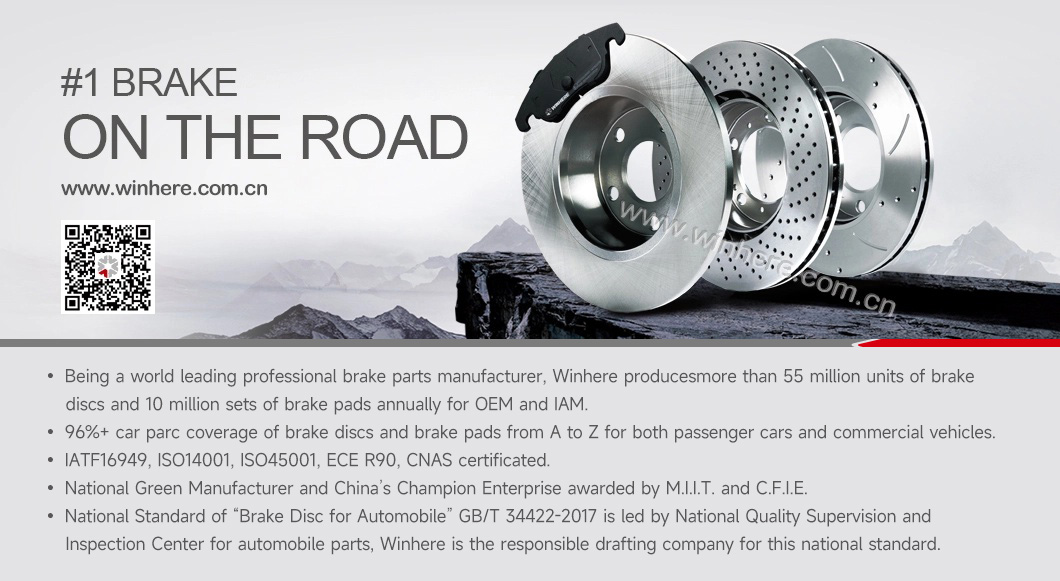
Products

OE-Matched for Mercedes Models: Directly fits core comfort-focused lineups, including C-Class, E-Class, GLC, GLE, and their hybrid variants. Ensures perfect alignment with factory calipers and hardware.
Solid One-Piece Construction: No ventilation channels, designed for low to moderate braking loads—ideal for daily driving where extreme heat buildup is rare.
Premium Material & Protection: High-quality cast iron (matched to Mercedes’ OE specs) with anti-corrosion coating to resist rust from road salt, rain, and moisture, preserving performance and appearance.
System Compatibility: Seamlessly integrates with Mercedes’ ABS, ESP, and hybrid regenerative braking systems, maintaining balanced braking force for smooth stops.
ECE R90 Compliance: Meets global safety standards for braking performance, passing tests for structural integrity, wear resistance, and dimensional accuracy.
Daily Driving Reliability: Solid construction delivers consistent braking for routine use—from urban stop-and-go to highway deceleration—aligning with Mercedes’ focus on effortless comfort.
Long-Lasting Durability: Resists wear from frequent light braking, reducing replacement frequency and lowering long-term maintenance costs for everyday drivers.
Luxury-Level Comfort: Minimizes vibration and noise during light stops, preserving the quiet, refined cabin experience Mercedes is known for.
Seamless Mercedes Integration: Retains the brand’s linear pedal feel and balanced braking dynamics, ensuring a familiar, confidence-inspiring drive.
Safety Compliance: ECE R90 certification guarantees adherence to global safety standards, supporting vehicle roadworthiness and inspection compliance worldwide.
Overview
This product is a solid (non‑ventilated) brake disc manufactured to OEM specifications for Mercedes‑Benz vehicles. Unlike ventilated discs, which feature internal cooling vanes, solid discs are a single piece of cast iron without internal passages. This design is typically specified for rear‑axle applications where braking loads and thermal demands are lower than the front axle. The solid construction provides reliable, consistent braking performance while offering advantages in weight, cost, and simplicity. Available with multiple protective finishes and optional drilled or slotted configurations, this disc serves Mercedes owners who require OEM‑grade quality for their rear braking system.
Solid vs. Ventilated – Understanding the Difference
Ventilated Discs
Feature internal cooling vanes between two friction faces.
Designed to dissipate high levels of heat generated during braking.
Typically used on front axles, where the majority of braking force is applied.
Heavier and more expensive to manufacture than solid discs.
Essential for vehicles with high kerb weights, performance driving, or frequent heavy braking.
Solid Discs
A single piece of cast iron without internal cooling passages.
Relies on the disc's mass and surface area to absorb and radiate heat.
Typically used on rear axles, where braking loads are significantly lower.
Lighter and more cost‑effective than ventilated discs.
Adequate for the thermal demands of rear‑axle braking in most passenger vehicles.
Why the Rear Axle Uses Solid Discs
The front axle typically handles 60‑80% of the vehicle's total braking force.
Rear brakes are subjected to significantly less heat generation.
Solid discs are sufficient to manage rear‑axle thermal loads without the added complexity of ventilation.
The reduced weight of solid discs on the rear axle contributes to lower unsprung mass and improved ride comfort.
When Ventilated Discs Are Still Used on the Rear
Some high‑performance vehicles, heavy SUVs, or vehicles with frequent towing use ventilated rear discs.
These applications generate higher rear‑axle heat loads that require additional cooling.
For standard Mercedes passenger vehicles, solid rear discs are the original equipment specification.
OEM Specification – Why It Matters for Mercedes Vehicles
Mercedes‑Benz is renowned for engineering precision, and the braking system is no exception.
OEM‑specification discs are manufactured to the exact dimensional and material standards of the original parts.
This ensures correct bolt pattern, centre bore, offset, and disc thickness – every detail matches the vehicle manufacturer's design.
The cast iron formulation is controlled to provide consistent friction characteristics and wear rates.
For Mercedes owners, OEM specification means the replacement disc maintains the vehicle's original braking performance and safety characteristics.
For workshops, it guarantees fitment without modifications, reducing installation time and eliminating customer return risks.
Solid Disc Construction – Practical Advantages
Simplicity and Reliability
Without internal cooling vanes, solid discs have a simpler casting and machining process.
This reduces the potential for casting defects and ensures consistent quality.
The solid construction is inherently robust – there are no vanes to crack or clog.
Weight Reduction
Solid discs are lighter than ventilated discs of the same diameter and thickness.
Reduced unsprung weight on the rear axle contributes to improved suspension response and ride comfort.
The weight saving also has a marginal positive effect on fuel efficiency.
Cost‑Effectiveness
The simpler manufacturing process makes solid discs more cost‑effective than ventilated discs.
For rear‑axle replacements, this provides a quality OEM‑grade solution at a lower price point.
The cost saving is passed on to the customer without compromising safety or performance.
Adequate Thermal Capacity
Although solid discs do not have ventilation, the rear axle's lower thermal load means they are sufficient for normal driving conditions.
The disc's mass absorbs heat during braking and radiates it to the surrounding air.
For standard passenger vehicle use – including highway driving, urban traffic, and light hills – solid rear discs perform reliably.
Performance Design Options
Drilled Configuration
Holes across the friction surface provide additional cooling and water evacuation.
The holes help expel water from the friction zone, improving wet‑weather braking response.
For Mercedes owners who drive in varying weather conditions, this option offers enhanced safety.
Drilled solid discs provide a sportier appearance while maintaining the benefits of solid construction.
Slotted Configuration
Grooves machined into the disc surface continuously clean the brake pad face.
Dust, debris, and gases are removed, preventing pad glazing and maintaining consistent friction.
Initial brake bite is improved, providing a more responsive pedal feel.
Slotted solid discs are suitable for drivers who value enhanced braking response.
Drilled + Slotted Combination
For those who want both cooling and self‑cleaning benefits, the combined configuration delivers maximum performance.
This option is particularly suited to Mercedes owners who drive more dynamically or in varied conditions.
Solid (Standard)
The standard configuration – a smooth, solid disc without drilling or slotting.
Suitable for most daily driving applications.
Provides reliable, quiet, and consistent braking performance.
Surface Protection Options
Oiled
Light rust‑preventive oil film applied during production for protection during storage and transit.
Easily cleaned before installation with brake cleaner or a suitable solvent.
Suitable for environments where corrosion is not a primary concern.
Painted
Durable paint applied to the hub and outer edges, providing long‑term corrosion resistance.
Maintains a clean, professional appearance over the disc's service life.
Recommended for regions with high humidity, coastal environments, or winter road salt exposure.
Coated
Advanced anti‑corrosion coating (zinc or geometric) offering superior long‑term protection.
The coating gradually wears from the friction area during normal braking, while the rest of the disc remains permanently shielded.
The highest level of corrosion protection for demanding environments or vehicles stored for extended periods.
The Front‑Rear Brake Balance – Understanding the Complete System
How Braking Force Is Distributed
When the brakes are applied, the vehicle's weight shifts forward, increasing the load on the front axle.
The front brakes therefore perform the majority of the braking work – typically 60‑80% of total stopping force.
Rear brakes contribute a smaller proportion of the total braking effort.
Why Rear Discs Are Different from Front Discs
Front discs must handle significantly more heat and are therefore ventilated.
Rear discs, with lower heat loads, can be solid without compromising safety or performance.
The rear discs also tend to wear more slowly than front discs due to the reduced workload.
Replacement Recommendations
Rear discs typically last longer than front discs – often two or three front disc replacements for each rear disc replacement.
However, rear discs should still be inspected regularly and replaced when worn or damaged.
Replacing rear discs with OEM‑grade solid discs ensures the front‑rear brake balance is maintained according to the vehicle manufacturer's design.
Who Is This Product For?
Mercedes Owners
For drivers who need to replace their rear brake discs with a quality OEM‑grade product.
For those who appreciate the engineering precision of Mercedes‑Benz and want to maintain it.
For owners who want a cost‑effective alternative to dealer‑priced parts without compromising quality.
Workshops Specialising in Mercedes
For service centres that work on Mercedes vehicles regularly and need a reliable rear disc option.
OEM specification ensures correct fitment every time.
The solid construction simplifies the product range – one disc serves multiple Mercedes models with the same rear disc specification.
Fleet Operators
For businesses operating Mercedes vehicles – whether as executive cars, taxis, or service vehicles.
Solid discs offer a durable, cost‑effective solution for rear‑axle replacements.
Reduced maintenance frequency compared to cheaper aftermarket alternatives.
Classic Mercedes Restoration
For owners restoring classic Mercedes vehicles that were originally equipped with solid rear discs.
OEM‑grade quality with modern manufacturing consistency.
Painted or coated finishes available for authentic appearance.
Why Choose OEM‑Grade Solid Discs Over Generic Alternatives
Generic Aftermarket Discs
May not meet the dimensional tolerances required for correct fitment.
Material quality can be inconsistent, leading to variable braking performance.
Corrosion protection is often minimal or absent.
May cause vibration, noise, or premature wear.
OEM‑Grade Solid Discs
Manufactured to the exact specifications of the original part.
Consistent material quality ensures reliable, predictable braking.
Protective finishes provide long‑term corrosion resistance.
Correct fitment ensures quiet, smooth, vibration‑free braking.
ECE R90 certification provides independent safety verification.
Certifications and Quality Assurance
Manufactured to Mercedes OEM specifications.
ECE R90 certified – meets European safety standards for replacement brake components.
Dimensional accuracy verified – run‑out and thickness variation controlled to tight tolerances.
Material composition consistent with original equipment standards.
Surface finish controlled for proper pad bedding and consistent friction.
Corrosion resistance of surface finishes validated through standardised testing.
Fitment and Compatibility
Specifically designed for rear‑axle applications on Mercedes‑Benz vehicles.
Suitable for a wide range of Mercedes models – consult the catalogue for specific fitment.
Available in various sizes and specifications to cover different Mercedes platforms.
Direct replacement – no modifications required.
Verify specific fitment by vehicle details (model, year, axle position) or by OEM reference number.
Consult the product catalogue or contact Winhere with vehicle information for confirmation.
Test and Inspection

100% critical dimensions, runout and DTV inspection
Material physical and chemical inspection
Test shear strength, compressibility, density, flatness and parallelism
Test performance and noise/NVH
Catalogue

Certifications