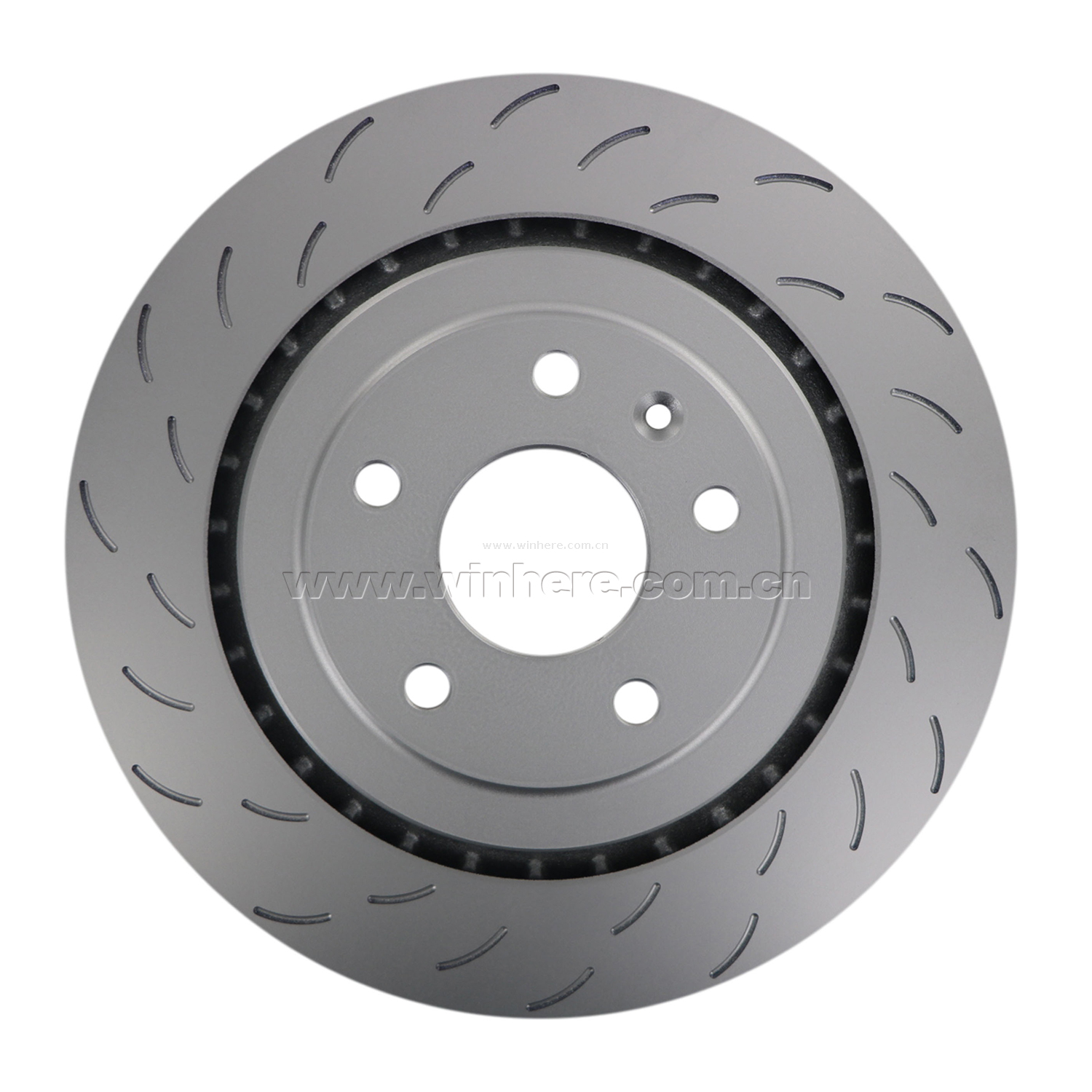
Views: 0 Author: Site Editor Publish Time: 2026-09-22 Origin: Site
Modern vehicles carry more weight and generate more horsepower than previous generations. This mechanical reality places immense thermal stress on braking systems. Spirited driving, heavy towing, and track use push friction components to their absolute limits. Under sustained heavy braking, standard cast-iron rotors struggle to dissipate heat. They become susceptible to thermal fade, judder, and micro-cracking. Drivers frequently misdiagnose this judder as a warped rotor. In reality, it stems from uneven material transfer caused by excessive heat. These failures compromise vehicle safety and force premature replacement cycles. Upgrading rotor metallurgy offers a proven method to mitigate these issues. Changing the chemical composition of the iron directly alters how the disc handles heat and vibration. This guide evaluates the chemical, thermal, and practical differences between specific rotor materials. We will compare high carbon brake discs against traditional options to determine which material aligns with your vehicle's operational demands.
Metallurgical Distinction: High carbon brake discs are cast iron rotors containing a specific carbon content (typically 3.6% to 3.9%), improving thermal conductivity and structural integrity compared to standard grey iron.
Crucial Clarification: High carbon iron rotors are not carbon-ceramic or carbon-carbon brakes; they are a cost-effective, direct-replacement upgrade for traditional iron systems.
Primary Benefits: The increased carbon content significantly dampens NVH (Noise, Vibration, and Harshness) and raises the threshold for thermal cracking under extreme heat cycles.
Decision Matrix: Standard brake discs remain optimal for standard commuter applications, while high carbon variants are the baseline requirement for heavy-duty towing, fleet operations, and high-performance track environments.
Table of Contents
Choosing high carbon brake discs starts with understanding the problem you want to solve. They are mainly used to reduce brake fade, improve durability on heavy vehicles, and control brake noise caused by heat and vibration.
A good brake disc must provide stable heat control, crack resistance, and consistent friction performance. Important factors include:
Heat resistance: Handles repeated braking without overheating.
Strength: Resists cracks caused by temperature changes.
Friction stability: Maintains consistent braking feel.
Wear resistance: Extends service life of discs and pads.
The brake disc works together with brake pads and calipers. Upgrading only the rotor may not improve performance if the other components are not suitable. The best results come from matching the disc material, pad compound, and braking application.
Before replacing the rotor, inspect common issues such as uneven wear and rotor vibration. Measurements like Disc Thickness Variation (DTV) and lateral runout help identify heat damage or surface distortion. High carbon brake discs can reduce these problems by providing better thermal stability under demanding conditions.
High carbon brake discs are made by increasing the carbon content in cast iron, usually around 3.6%–3.9%. The higher graphite content improves heat transfer, helping the rotor move heat away from the friction surface faster. This reduces overheating and improves braking stability during heavy use.
High carbon brake discs are still a type of cast iron and are different from carbon ceramic brakes. Carbon ceramic systems use advanced materials for extreme performance applications, while high carbon iron is designed for daily driving, heavy vehicles, and performance upgrades. It improves heat control but does not significantly reduce vehicle weight.
Many people call brake rotors “steel brakes,” but most passenger vehicle rotors are made from cast iron. Both standard and high carbon brake discs use cast iron materials because they provide better friction performance and wear resistance.
Producing high carbon brake discs requires precise casting control. Higher carbon levels make the material more sensitive during cooling, so manufacturers must carefully manage temperature and production processes. Strict quality control ensures the final rotor maintains strength, durability, and stable braking performance.
Standard grey cast iron serves as the foundation for most OEM braking systems. This material typically features a lower carbon content and a higher silicon ratio. The lower carbon level makes the iron easier to pour and machine. This composition provides a reliable, predictable friction surface for everyday driving conditions.
For roughly 80% of daily commuting, Standard Brake Discs are perfectly adequate. They offer excellent cold bite, meaning the brakes respond immediately when you back out of a driveway on a freezing morning. They handle stop-and-go traffic efficiently. The manufacturing simplicity also keeps replacement parts highly accessible for the average vehicle owner.
However, standard rotors fail predictably under high thermal shock. When standard iron exceeds its thermal capacity, several destructive processes occur. The intense heat causes localized changes in the metal's structure, forming ultra-hard spots called cementite. Brake pads cannot grip cementite properly. This leads to uneven pad deposits across the rotor face. The resulting thickness variation causes severe pedal pulsation. Extreme heat cycles also cause structural distortion, physically warping the hat or vanes of the disc.
Cementite formation is a metallurgical phase change. It happens when a specific area of the rotor heats up past its critical temperature and then cools rapidly, quenched by the surrounding cooler iron. This creates a spot on the rotor that is significantly harder than the rest of the surface. As the brake pad sweeps over this hard spot, it wears away the softer surrounding iron faster. Over thousands of rotations, this creates a physical wave in the rotor face. Drivers feel this wave as a violent steering wheel shake during highway deceleration.
Understanding the exact physical differences between these materials helps dictate proper application. The variations manifest in heat management, acoustic dampening, and structural durability.
High carbon brake discs manage heat better than standard rotors. During braking, kinetic energy converts into heat, and the graphite structure in high carbon iron helps transfer heat away from the friction surface faster. This reduces brake pad overheating, lowers the risk of brake fade, and improves braking stability during repeated heavy use. High carbon materials also handle rapid heating and cooling cycles better, reducing distortion and vibration caused by temperature changes.
Brake noise often comes from vibration between the brake pad and rotor surface. The graphite structure in high carbon iron helps absorb these vibrations, reducing brake squeal and harsh braking sounds. This advantage is especially useful when using performance brake pads, as high carbon rotors can provide strong braking performance while maintaining a quieter driving experience.
Extreme braking conditions, such as track driving or heavy towing, create intense heat and thermal stress. Standard brake discs may develop cracks or surface distortion under repeated temperature changes. High carbon brake discs offer better strength and thermal stability, helping prevent heat cracks, maintain rotor shape, and provide more consistent braking performance in demanding applications.
Performance Metric | Standard Cast Iron | High Carbon Cast Iron |
|---|---|---|
Carbon Content | Typically under 3.5% | 3.6% to 3.9% |
Thermal Conductivity | Baseline / Average | High (Faster heat dissipation) |
NVH Dampening | Low to Moderate | Excellent (Reduces squeal) |
Resistance to Micro-cracking | Moderate | Superior |
Unsprung Weight | Standard | Standard (Identical to baseline) |
Ideal Application | Daily Commuting, Light Duty | Towing, Track Days, Heavy SUVs |
Selecting the correct rotor material requires an honest assessment of how the vehicle is used. Over-equipping a daily commuter provides no tangible benefit, while under-equipping a tow rig invites disaster.
For sedans, compact cars, and minivans used for daily commuting, standard brake discs are usually enough. These vehicles generate moderate heat during normal driving and rarely exceed the thermal limits of standard cast iron rotors. They provide reliable braking performance, quick response in cold conditions, and lower replacement costs, making them suitable for everyday use.
Heavy vehicles such as trucks, SUVs, and fleet vehicles create much higher braking loads. During towing or long downhill driving, standard rotors can overheat and cause brake fade. High carbon brake discs offer better heat transfer and stability, helping maintain consistent braking performance, reduce brake vibration, and extend service intervals in demanding applications.
Track driving generates extreme heat through repeated high-speed braking. Standard brake discs may experience overheating, distortion, and reduced braking performance under these conditions. High carbon brake discs provide better heat resistance and structural stability, helping maintain consistent braking force, reduce brake fade, and support high-performance driving requirements.
Upgrading your rotors involves more than just bolting on new parts. You must navigate aftermarket terminology, match friction materials correctly, and execute proper break-in procedures to ensure success.
The automotive aftermarket is flooded with vague marketing terms. Words like "premium," "heavy-duty," or "performance" do not guarantee high carbon metallurgy. You must look past the marketing fluff. Identify true high carbon discs by checking the manufacturer's technical specifications. Reputable brands explicitly state the carbon content or use a designated "High Carbon" label on the packaging.
Navigating the aftermarket requires diligence. Look for specific product lines known for verified metallurgy. Ensure the manufacturer provides actual chemical composition data rather than just promising better stopping power. If the technical data sheet does not mention carbon percentages or graphite structures, assume it is standard grey iron.
A high carbon rotor is only as effective as the brake pad squeezing it. Compound synergy dictates the system's overall performance. Pairing a thermally advanced rotor with a cheap, basic organic brake pad negates all thermal benefits. The organic pad will overheat, glaze over, and fail long before the rotor reaches its thermal limit.
To fully utilize the rotor's heat capacity, you must use aggressive compounds. High-temperature ceramic or semi-metallic pads are mandatory for heavy-duty or track applications. Semi-metallic pads offer exceptional high-heat friction. The high carbon rotor naturally dampens the noise these aggressive pads generate. This combination provides massive stopping power, high fade resistance, and acceptable street manners.
Brake Pad Compound | Compatibility with High Carbon Rotors | Expected Result |
|---|---|---|
Non-Asbestos Organic (NAO) | Poor | Pad overheats and glazes before rotor reaches capacity. |
Standard Ceramic | Good | Low dust, quiet operation, excellent for heavy SUVs. |
Aggressive Semi-Metallic | Excellent | Maximum stopping power, rotor dampens the inherent pad noise. |
Track-Dedicated Carbon/Kevlar | Excellent | Maintains stable friction coefficient at extreme temperatures. |
Proper implementation requires a strict bedding-in procedure. Bedding-in establishes a uniform transfer layer of friction material onto the rotor face. This microscopic layer of pad material is what actually generates friction during braking. If this layer is uneven, the brakes will judder.
The reality of implementation involves a series of controlled stops. You must heat the system gradually. Perform five to eight moderate stops from 40 mph down to 10 mph without coming to a complete halt. Then, perform three to five aggressive stops from 60 mph down to 15 mph, engaging the ABS if necessary. Finally, drive the vehicle at highway speeds for ten minutes without touching the brakes to allow the rotors to cool completely.
Never hold the brake pedal down at a stoplight immediately after a hard braking event. Holding the pedal on hot rotors imprints a thick layer of pad material in one spot. This localized hot spot leads to early failure, regardless of the rotor's carbon content. Strict adherence to the pad manufacturer's bedding instructions is non-negotiable.
Drivers often wonder if the harder surface of a high carbon disc accelerates brake pad wear. In reality, the wear trade-offs are minimal. While high carbon iron is denser, it provides a smoother, more stable friction surface. This stability often prevents the pad from glazing and chunking, leading to more even wear over time. Standard iron distorts, which chews up brake pads unevenly.
Corrosion resistance remains a critical maintenance factor. High carbon content does not inherently prevent rust. Bare cast iron will oxidize immediately in wet environments. To combat this, look for rotors featuring UV-cured or zinc coatings on the non-friction surfaces. Coated rotor hats and cooling vanes prevent rust buildup, ensuring proper heat dissipation and maintaining a clean aesthetic behind open-spoke wheels.
When performing routine maintenance, mechanics should inspect the cooling vanes of the rotor. Rust scale can build up inside the vanes, blocking airflow. Blocked vanes trap heat, negating the thermal advantages of the high carbon metallurgy. Coated rotors prevent this internal scale buildup, ensuring the directional vanes continue to pump air through the disc efficiently.
Audit your vehicle's weight, primary usage, and historical brake failure points to determine if thermal overload is the root cause of your braking issues.
Verify the metallurgy of your chosen replacement rotor by checking the manufacturer's technical specifications for explicit high carbon designations.
Select a chemically compatible, high-temperature semi-metallic or ceramic brake pad to match the thermal capacity of your new rotors.
Execute a strict bedding-in procedure immediately after installation to establish an even friction transfer layer and prevent localized hot spots.
Inspect the caliper slide pins and piston seals during installation to ensure the pads retract fully, preventing dragging and unnecessary heat buildup.
A: No. High carbon rotors are traditional cast iron discs manufactured with a slightly higher percentage of carbon. Carbon-ceramic brakes use an exotic matrix of carbon fibers and silicon resin. High carbon iron is a direct replacement for standard brakes, whereas carbon-ceramic systems are highly specialized and found mostly on track-dedicated sports cars.
A: High carbon iron rotors weigh exactly the same as standard cast iron rotors of the same physical dimensions. The increased carbon content alters the microscopic graphite structure to improve heat dissipation and reduce vibration. It does not reduce the overall mass or unsprung weight of the vehicle.
A: Generally, no. While the iron matrix is denser, it provides a highly stable and smooth friction surface. This structural stability prevents the rotor from distorting under heat. A flat, stable rotor face actually promotes even brake pad wear and prevents the pad from glazing or chunking prematurely.
A: You can, but it defeats the purpose of the upgrade. Standard organic pads will overheat and fade long before the high carbon rotor reaches its thermal limit. To maximize the thermal capacity of the upgraded rotor, pair it with a high-performance semi-metallic or advanced ceramic brake pad.
A: Yes. The higher density of graphite flakes within the iron matrix acts as a natural acoustic dampener. These flakes absorb the high-frequency vibrations generated by the brake pads rubbing against the disc. This significantly reduces high-pitched brake squeal and low-frequency groaning during deceleration.
A: The carbon content itself does not prevent rust. Bare high carbon iron will oxidize just as quickly as standard iron when exposed to moisture and road salt. To prevent rust, you must purchase rotors that feature a specialized zinc, UV, or painted anti-corrosion coating on the hats and cooling vanes.