Views: 0 Author: Site Editor Publish Time: 2026-09-22 Origin: Site
The primary failure mode of brake rotors in harsh climates is rarely friction wear. Instead, structural degradation from rust typically destroys the component long before the friction surface reaches its minimum thickness limit. Unprotected cast iron remains highly susceptible to galvanic corrosion, road salt, and moisture. This constant environmental exposure leads to uneven pad wear, severe pedal pulsation, and premature replacement cycles. Anti-corrosion coatings do not inherently increase raw stopping power or alter the friction coefficient. Rather, they preserve the rotor's structural integrity to maintain stopping consistency over time. By preventing rust scale buildup on critical mounting surfaces and internal cooling passages, these protective layers ensure the braking system operates exactly as engineered. We will evaluate how coated brake discs compare against standard Uncoated Brake Discs based on metallurgical protection, installation efficiency, and thermal performance.
Corrosion Mitigation: Coated brake discs utilize specialized barriers (like Geomet, Zinc, or UV-cured polymers) to protect the rotor hat, cooling vanes, and edges from rust, extending the structural integrity of the disc.
Installation Efficiency: Unlike standard uncoated brake discs that require heavy degreasing to remove shipping oils, premium coated rotors are ready-to-install out of the box, significantly reducing labor time.
Environmental Dependency: The ROI of coated rotors is highest in "rust belt" regions, coastal areas, and extreme winter climates (e.g., Canadian driving conditions) where heavy road salt accelerates oxidation.
NVH and Bedding Risks: While coated rotors offer superior longevity, improper bedding procedures can lead to pad glazing and severe Noise, Vibration, and Harshness (NVH) issues, such as brake squeal.
Aesthetic and Functional Overlap: Beyond rust prevention, coatings maintain a clean appearance behind open-spoke alloy wheels and prevent rust-jacking between the rotor hat and wheel hub.
Table of Contents
Grey cast iron is the standard material for automotive brake rotors. It offers excellent thermal mass, rapid heat dissipation, and superior dampening characteristics to suppress brake squeal. However, its metallurgical composition leaves it highly vulnerable to oxidation. When exposed to oxygen and moisture, the iron matrix breaks down. Chlorides from road salt or coastal air act as a powerful catalyst. They accelerate the galvanic corrosion process exponentially, eating away at the virgin metal.
Extreme thermal cycling complicates this vulnerability. Rotors transition from freezing ambient temperatures to hundreds of degrees within minutes. This rapid expansion and contraction creates micro-fissures in surface rust. Moisture penetrates deeper into the iron beneath. Over a single winter season, a bare iron rotor develops significant structural scaling. We see this constantly in northern repair shops. A rotor might have plenty of physical thickness left on the friction ring, but the structural rust makes it entirely unusable and unsafe for highway driving.
Ventilated rotors feature internal cooling vanes. These vanes draw ambient air from the center of the hub and expel it outward. This centrifugal pumping action sheds heat during heavy braking. When internal vanes remain unprotected, rust scale rapidly accumulates inside these narrow passages. The oxidation expands, choking off the designed airflow paths.
Rust buildup restricts airflow through the ventilated disc. As the cross-sectional area of the cooling vents shrinks, thermal dissipation drops drastically. The rotor retains more heat. This pushes the brake pads beyond their optimal operating temperature window. Retained heat increases the risk of brake fade. Stopping power diminishes despite heavy pedal pressure. Prolonged driving in harsh winter conditions with clogged cooling vanes degrades stopping consistency. Emergency stops become unpredictable. Technicians frequently pull rotors off trucks where the cooling vanes are completely blocked by solid rust scale. The driver usually complains of a soft pedal, which is entirely due to localized brake fluid boiling from the trapped rotor heat.
Corrosion aggressively targets the mounting interface between the rotor hat and the wheel hub. When rust forms on this mating surface, it creates an uneven mounting plane. This phenomenon is known as rust-jacking. It prevents the rotor from seating perfectly flat against the hub assembly. The rust physically pushes the rotor away from the hub flange.
Even a microscopic layer of rust on the hub flange translates to significant lateral runout at the outer edge of the rotor. As the rotor spins with a slight wobble, it strikes the brake pads unevenly during normal driving. This constant, intermittent contact wears away specific sections of the friction ring. It leads to Disc Thickness Variation (DTV). Once DTV develops, the driver experiences severe brake pedal pulsation and steering wheel shake during deceleration.
Impact of Hub Rust on Rotor Runout | ||
Hub Rust Thickness (Inches) | Resulting Outer Edge Runout (Inches) | Symptom Experienced by Driver |
|---|---|---|
0.000 (Clean Hub) | 0.001 - 0.002 | Smooth braking, normal operation |
0.002 (Light Surface Rust) | 0.004 - 0.006 | Slight pedal flutter at highway speeds |
0.004 (Moderate Scale) | 0.008 - 0.012 | Noticeable steering wheel shake, pedal pulsation |
0.006+ (Severe Rust-Jacking) | 0.015+ | Violent shaking, compromised braking distance |
The automotive aftermarket offers two distinct approaches to rotor manufacturing. Understanding the baseline engineering of bare iron versus the advanced chemistry of protective barriers clarifies why certain environments demand specific mechanical solutions.
Standard uncoated brake discs are made from bare cast iron without additional corrosion protection. Manufacturers usually apply temporary oils or protective coatings during storage and shipping to prevent rust before installation. They are a cost-effective choice for dry climates, high-mileage vehicles, and track applications where heat performance is more important than corrosion resistance.
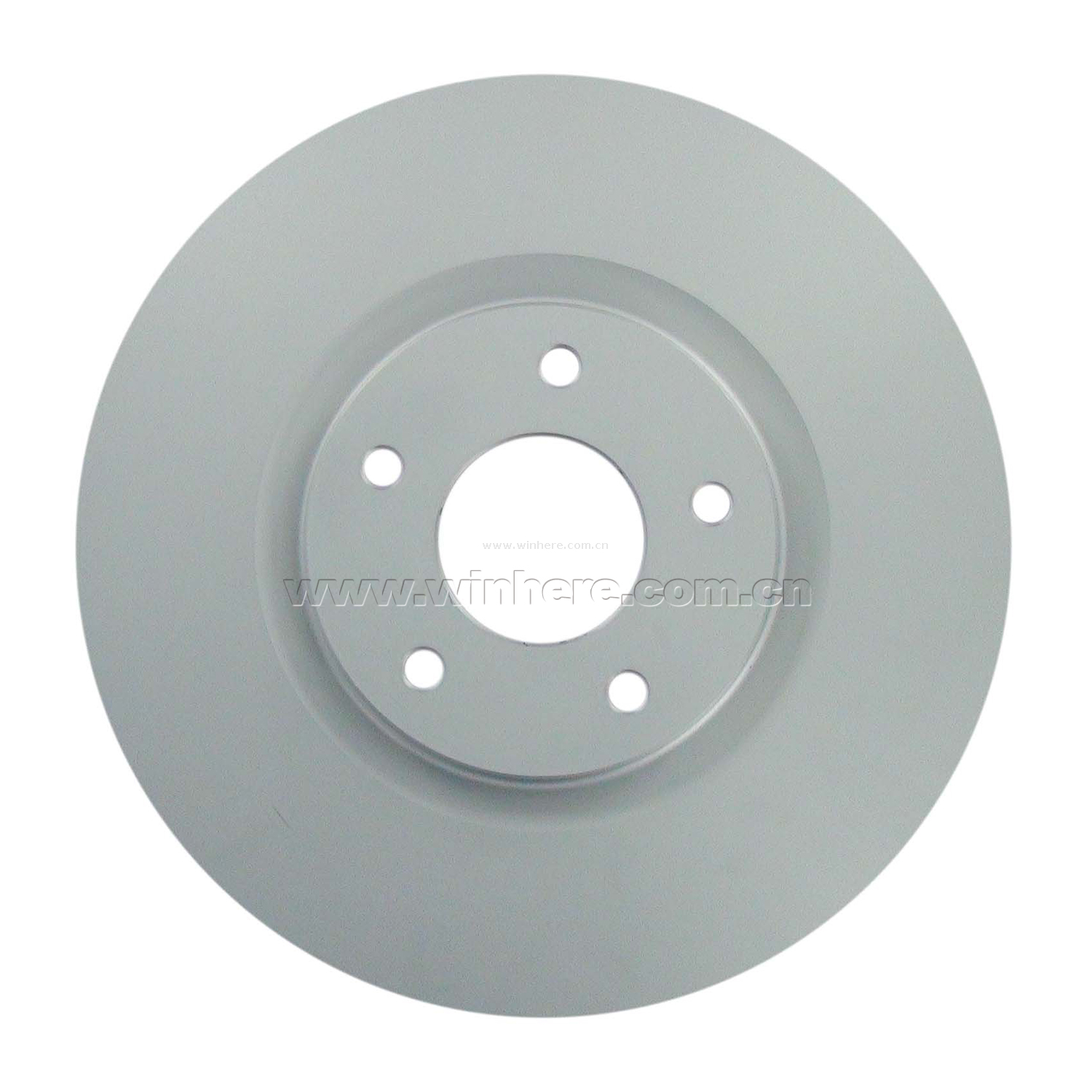
Coated brake discs use protective layers such as zinc-based coatings or anti-corrosion finishes to protect cast iron from moisture, road salt, and rust. These coatings cover non-friction areas like the hub and edges while allowing the brake pad contact surface to wear clean during initial use. They provide better corrosion resistance, improved appearance, and longer service life in harsh environments.
Comparing these two components requires moving beyond basic specifications. We must examine how they perform under real-world mechanical stress, environmental exposure, and long-term usage on the road.
Coated brake discs provide better corrosion resistance than standard cast iron rotors. Salt-spray tests such as ASTM B117 show that protective coatings can significantly delay rust formation. In real winter conditions, zinc-based coatings help protect the rotor surface from road salt and moisture, reducing deep corrosion and extending service life.
After thousands of miles, coated and uncoated brake discs show clear visual differences. Standard rotors often develop surface rust on the hub and edges, while coated rotors maintain a cleaner appearance. This advantage is especially valuable for vehicles with open alloy wheels where the braking system is highly visible.
Modern brake coatings are extremely thin and have little impact on heat transfer. However, coated rotors require proper bedding-in after installation. Aggressive braking before the coating wears away may contaminate the brake pads, causing noise and reduced braking performance.
Rust-free brake components improve the overall appearance of modern vehicles. Protective coatings help maintain a clean finish on visible areas such as the rotor hub and outer edges. This makes coated brake discs a popular choice for luxury cars, performance vehicles, and owners who care about wheel appearance.
The physical process of replacing braking components differs wildly depending on the chosen rotor type. Shop efficiency, chemical usage, and mechanical preparation all shift based on the presence of a protective barrier.
Standard bare iron requires extensive preparation before it can be mounted to the vehicle. The heavy shipping oils and cosmoline must be completely stripped from the metal. This requires liberal application of aerosol brake cleaner, aggressive scrubbing with shop rags, and careful disposal of the resulting chemical runoff. Failing to remove all shipping oil guarantees immediate pad contamination and total brake failure.
Protected rotors bypass this entire process. They are engineered to be strictly ready-to-install out of the box. The technician simply removes the component from the packaging and mounts it directly to the hub. Applying harsh brake cleaners to these components is heavily discouraged. Strong solvents can damage the protective polymer or UV layers. This compromises the rust barrier and potentially creates a sticky residue that contributes to pad contamination.
Place the bare iron rotor over a dedicated drain pan to catch chemical runoff.
Spray the entire friction surface, front and back, with a high-VOC brake parts cleaner.
Wipe the surface aggressively with a clean, lint-free shop towel to remove the dissolved cosmoline.
Spray the internal cooling vanes to flush out any trapped shipping oils.
Repeat the wiping process until the towel comes away completely clean.
Allow the bare metal to air dry completely before mounting it to the vehicle hub.
Installation Comparison: Bare Iron vs. Protected Rotors | ||
Installation Step | Bare Cast Iron | Protected Rotors |
|---|---|---|
Unboxing State | Covered in shipping oil/cosmoline | Clean, dry, ready to handle |
Chemical Prep | Requires heavy brake cleaner application | Zero chemicals required; do not use solvents |
Physical Prep | Scrubbing friction surfaces with rags | Direct mounting to the hub assembly |
Environmental Impact | Generates VOCs and contaminated rags | Zero chemical runoff |
Labor Time Impact | Adds 5-10 minutes per axle | Immediate installation |
Mating new brake pads to a fully coated friction surface requires a specific, controlled technical protocol. The goal is to mechanically scrape away the contact-patch barrier without generating enough heat to melt the material into the pad.
The exact procedure involves a series of gradual stops. The driver should perform several gentle decelerations from low speeds (e.g., 30 mph down to 10 mph). Allow the brakes to cool slightly between each application. This initial friction safely abrades the barrier. Once the swept area is visually clear of the coating, the driver can proceed with standard aggressive bedding procedures to transfer the pad friction film onto the bare iron. Provided the driver follows this gradual heat-cycling process, the initial barrier removal will not contaminate the brake pad compound.
Regardless of the rotor technology selected, wheel hub preparation remains absolute. The technician must aggressively wire-brush the wheel hub flange to remove all existing rust scale and debris. Mechanics typically use an abrasive die grinder pad or a dedicated hub resurfacing tool. The mating surface must be perfectly flat. Installing a pristine, newly protected rotor over a rusted, uneven hub guarantees lateral runout, subsequent DTV, and inevitable pedal pulsation. Hub preparation is the foundation of a successful brake job.
Selecting the appropriate braking component involves analyzing upfront acquisition against long-term maintenance frequency. The mechanical benefits of advanced rust prevention directly influence how often a vehicle requires shop downtime.
Coated brake discs usually have a higher upfront cost because they require additional protection processes such as spraying, coating, and curing. However, in areas with heavy rain, snow, or road salt, the longer service life can offset the initial investment. By reducing rust-related problems such as vibration and premature replacement, coated rotors provide better long-term value.
For fleets operating in harsh environments, coated brake discs can reduce maintenance time and vehicle downtime. Their ready-to-install design saves preparation work, while improved rust resistance helps prevent early failures. This allows vehicles to stay on the road longer and reduces overall maintenance costs.
Coated brake discs are not required for every application. In dry climates with low humidity and no road salt exposure, standard uncoated brake discs can provide reliable performance at a lower cost. For vehicles where heat and friction wear are the main concerns rather than corrosion, traditional cast iron rotors remain a practical choice.
The mechanical reality of automotive braking systems dictates that environmental exposure is just as destructive as friction wear. Coated brake discs represent a functional necessity for vehicles operating in wet, salty, or coastal climates. They preserve structural integrity and stopping consistency. They also serve as a distinct aesthetic upgrade for vehicles with open-spoke wheels in dry climates. Conversely, standard bare iron rotors remain highly viable for dry-weather environments or track-specific applications where thermal mass outweighs corrosion concerns.
Making the correct choice requires a simple decision matrix based on Geography, Vehicle Type, and Labor. Rust Belt and Canadian drivers should default to maximum protection. Sun Belt drivers can safely utilize bare iron unless wheel aesthetics are a priority. Mechanics must weigh the immediate labor savings of ready-to-install components against the baseline acquisition.
Inspect your current rotors for heavy scaling inside the cooling vanes and rust buildup on the central hat to determine your specific environmental wear patterns.
Consult your vehicle's specific brake catalog to ensure the selected rotor matches your exact hub dimensions and caliper clearances.
Verify pad compound compatibility, ensuring your chosen ceramic or semi-metallic pads are approved for use with your selected rotor finish.
Review the manufacturer's specific bedding-in instructions to prevent pad glazing during the critical first miles of driving.
A: No. They are strictly ready-to-install out of the box. You should never apply brake cleaner or harsh solvents to these components. Using brake cleaner can rapidly degrade certain UV or polymer protective layers, creating a sticky residue that leads to severe noise, pad contamination, or glazing issues during the first drive.
A: No. Protective barriers do not increase the friction coefficient or provide raw stopping power. They act purely as a rust preventative. Their primary mechanical benefit is maintaining stopping consistency over the rotor's lifespan by preventing rust-jacking and keeping cooling vanes clear of debris.
A: No, provided proper bedding procedures are followed. The barrier is specifically designed to be safely abraded away by the brake pads during the first few gentle stops. If you avoid aggressive, high-heat braking immediately after installation, the material will scrape off cleanly without causing pad contamination.
A: The return on investment depends entirely on your local climate. They are highly worth the investment in snowy, icy, or coastal areas to prevent premature structural rust and pedal pulsation. However, they are less critical in arid, desert regions where moisture and road salt are not present.
A: The barrier on the friction surface is removed immediately during the first few stops. However, the protection applied to the central hat, outer edges, and internal cooling vanes typically lasts the entire functional life of the rotor, preventing structural rust until the friction ring wears too thin.
A: Yes, they will function mechanically, but you must expect accelerated degradation. Bare iron in winter climates suffers from rapid rust-jacking, vane clogging, and reduced stopping consistency. This often leads to premature replacement due to severe corrosion and pedal pulsation rather than actual friction wear.
A: Painted rotors typically feature a basic aesthetic paint applied only to the central hat to prevent visible rust behind the wheel. Fully coated Geomet rotors utilize full-submersion zinc-flake technology that protects the entire component, including the internal cooling vanes, defending against structural rust from the inside out.